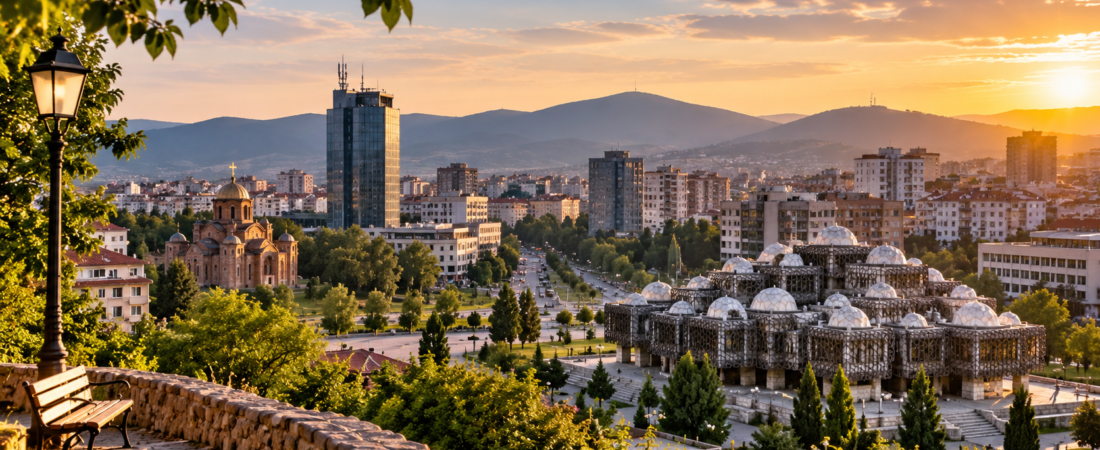
Kosovo has become an increasingly interesting place to live for foreigners, remote workers, entrepreneurs and expats looking for an affordable base in Southeast Europe. With relatively low living costs, a young population, growing cities and easy access to much of the Balkans, the country offers a lifestyle that can be very different from Western Europe.
Living in Kosovo, however, also comes with practical questions. How much does it cost to live here? Where should you live? How do housing, transport, healthcare and everyday services work? And what should foreigners know before moving?
This guide covers the practical side of living in Kosovo in 2026, from accommodation and daily expenses to transportation, healthcare, safety and everyday life.
What Is It Like to Live in Kosovo?
Living in Kosovo combines relatively affordable everyday costs with a lively café culture, growing urban centers and a slower pace of life than many larger European capitals. Pristina is the country’s main economic and cultural hub, while cities such as Prizren, Peja and Gjakova offer smaller-city alternatives with their own character.
Daily life can be convenient, especially in central urban areas where supermarkets, cafés, restaurants, pharmacies and other essential services are usually easy to reach. English is commonly spoken among younger people and in many businesses in Pristina, although learning some Albanian or Serbian can make everyday interactions easier depending on where you live.
Foreigners should also expect some differences compared with Western European countries. Public transport and administrative processes can be less predictable, traffic can be heavy in Pristina, and the quality of infrastructure varies by location. For many residents, however, relatively affordable housing, an active social culture and Kosovo’s central position in the Balkans are important advantages.
Cost of Living in Kosovo in 2026
Kosovo remains relatively affordable compared with many Western European countries, but living costs have increased in recent years. Your monthly budget will depend heavily on where you live, the type of accommodation you choose and your lifestyle.
Pristina is generally the most expensive city, particularly for rent in central and popular residential areas. Smaller cities such as Prizren, Peja and Gjakova can offer lower housing costs.
Housing is usually the largest monthly expense. Groceries and local services can still be reasonably priced, while regularly eating at international restaurants, using taxis and renting a modern apartment in central Pristina can increase your monthly spending considerably.
Because prices can change quickly, anyone planning a move should check current rental listings and everyday costs before setting a fixed budget.
Typical Monthly Expenses
| Expense | Typical Monthly Cost |
| Rent -1 bedroom apartment | €250 -€500 |
| Utilities | €60 -€120 |
| Groceries-1 Person | €180-€300 |
| Mobile & Internet | €20-€40 |
| Local transport | €15-€40 |
| Eating out & leisure | €100-€250 |
These figures are approximate and can vary significantly depending on the city, neighborhood, apartment standard and personal lifestyle. Pristina generally sits at the higher end of the range, while smaller cities can be noticeably more affordable.
Housing and Rent in Kosovo
Finding accommodation is one of the first priorities when moving to Kosovo. Apartments are widely available in the main cities, with the largest rental market concentrated in Pristina.
Rental prices vary considerably by neighborhood, apartment size, age of the building and whether the property is furnished. Modern apartments in central or popular areas of Pristina usually command higher rents, while properties farther from the center and apartments in smaller cities can be considerably cheaper.
Many rental properties are offered furnished, which can make moving easier for foreigners. Before signing a rental agreement, check what is included in the monthly rent, how utilities are paid, whether a deposit is required and which party is responsible for maintenance or repairs.
Popular Areas to Live in Pristina
Pristina offers a variety of neighborhoods, and the best area depends on your budget, workplace and preferred lifestyle.
Ulpiana is a well-established residential neighborhood close to the city center, with cafés, shops and everyday services within easy reach.
Dardania is another popular residential area with convenient access to central Pristina and a wide range of local businesses and services.
Pejton is centrally located and can be attractive for people who want to live within walking distance of many offices, restaurants and cafés.
Lakrishte has seen significant modern development and includes newer apartment buildings, offices and commercial spaces close to the center.
Arbëria (Dragodan) is a hilly residential area overlooking parts of the city. It includes apartments and houses and is popular with some international residents.
Mati 1 is a developing residential area with many newer apartment buildings. It can offer more space than central neighborhoods, although traffic and commuting time should be considered.
Before choosing an apartment, it is worth visiting the neighborhood at different times of day and checking traffic, parking, nearby supermarkets and the distance to your workplace or school.
Food and Grocery Costs in Kosovo
Food costs in Kosovo can be relatively affordable, particularly if you buy local products and cook at home. Supermarkets are widely available in Pristina and other cities, while local markets can be useful for fresh fruit, vegetables and other everyday products.
Imported products and international brands are usually more expensive than locally produced alternatives. Your grocery budget will therefore depend considerably on your shopping habits and preferred brands.
Eating out is also a common part of everyday life in Kosovo. Local bakeries, cafés and traditional restaurants can be inexpensive, while international restaurants and more upscale venues in Pristina naturally cost more.
Coffee culture is especially prominent. Cafés are an important part of social life, and it is common to see busy coffee shops throughout the day, particularly in central Pristina.
Eating Out in Kosovo
Kosovo has a diverse restaurant scene that ranges from traditional Albanian and Balkan cuisine to Italian, Turkish, Asian and international food. Casual meals and bakeries can be budget-friendly, while prices rise at higher-end restaurants.
For someone living in Kosovo rather than visiting as a tourist, combining home cooking with occasional meals out can keep monthly food expenses manageable.
Transportation and Getting Around
Getting around Kosovo is relatively straightforward, although transportation options vary depending on where you live. In Pristina, residents commonly use city buses, taxis and private cars, while walking can be practical if you live and work near the city center.
Public buses connect many parts of Pristina and are generally an affordable option for everyday travel. Taxis are also widely used, particularly for shorter journeys around the city. When using a taxi, choosing an established company and confirming how the fare will be calculated can help avoid misunderstandings.
Driving offers more flexibility, especially if you plan to travel outside Pristina. However, traffic congestion can be significant during busy periods, and parking can be difficult in central areas.
Intercity buses connect Pristina with cities such as Prizren, Peja, Gjakova, Gjilan and Mitrovica. For people who regularly travel around Kosovo, owning or renting a car can provide considerably more flexibility.
Healthcare in Kosovo
Kosovo has both public and private healthcare services. Foreign residents may choose private clinics for routine consultations, diagnostics and specialist care because appointments can be easier to arrange and private facilities may offer additional convenience.
Healthcare availability and the range of specialist services can vary by location, with Pristina offering the widest selection of hospitals, clinics, laboratories and pharmacies. Pharmacies are common throughout urban areas and many stay open for extended hours.
Foreigners planning to live in Kosovo should understand how their health insurance works before moving and check whether their policy covers treatment in Kosovo. For major or specialized medical treatment, some residents may also consider healthcare options elsewhere in the region depending on their individual needs.
Is Kosovo Safe to Live In?
For most foreigners, everyday life in Kosovo involves the same basic safety precautions that would apply in many European destinations. However, the security situation is not identical across the country, and residents should stay informed about local developments.
Official travel guidance advises taking normal precautions against issues such as pickpocketing, particularly in busy public places and on public transport. Using established taxi companies, protecting valuables and avoiding isolated areas late at night are sensible precautions.
Particular attention should be paid to northern Kosovo. Political and ethnic tensions can lead to demonstrations, road disruptions and occasional security incidents, especially around North Mitrovica, Zvečan, Zubin Potok and Leposavić. Conditions can change quickly, so foreigners travelling to these areas should check current official travel advice and local news before visiting.
Demonstrations can also occasionally take place in Pristina and other cities. They are often peaceful but may disrupt traffic and public transportation. Residents should avoid large demonstrations and follow instructions from local authorities.
Kosovo’s general emergency number is 112 which can be used for police, ambulance and fire emergencies.
Internet, Mobile Phones and Connectivity
Kosovo has generally good internet and mobile connectivity, particularly in Pristina and other major cities. High-speed home internet is widely available in urban areas, making Kosovo a practical option for remote workers, freelancers and people who depend on reliable internet for everyday work.
Mobile coverage is also widely available across populated areas. Prepaid SIM cards and monthly mobile packages can be purchased locally, with different combinations of calls, messages and mobile data depending on the provider and plan.
Home internet packages are commonly offered together with television or other services. Prices and available speeds vary by provider and location, so it is worth comparing packages before signing a contract, especially when renting an apartment.
For newcomers, getting connected is usually straightforward. Before choosing a provider, check coverage at your exact address and ask whether installation, equipment or a minimum contract period is required.
Banking and Managing Money in Kosovo
Kosovo uses the euro (€), which makes everyday payments straightforward for people arriving from eurozone countries. Banks, ATMs and card payment facilities are widely available in Pristina and other major cities.
Debit and credit cards are commonly accepted in supermarkets, restaurants, shopping centers, hotels and many other businesses. However, keeping some cash available is still useful, particularly for smaller shops, markets, cafés and certain local services.
Foreign residents may also be able to open a local bank account, although the required documents can vary between banks and according to residency status. Banks may request a valid passport, proof of address and a Kosovo residence or work permit, together with additional identification or compliance documents.
Before opening an account, compare monthly account fees, ATM charges, international transfer costs, mobile banking services and card fees. Foreigners should also ask the bank specifically about requirements for non-citizens, as account-opening procedures can differ between institutions.
Online and mobile banking are available from major banks and can be used for everyday services such as checking balances, making transfers and paying bills.
Language and Communication in Kosovo
Kosovo is a multilingual country. Albanian and Serbian are the official languages, while Turkish also has official status at the municipal level in some areas.
Albanian is the most widely spoken language in most of Kosovo, while Serbian is commonly spoken within Kosovo Serb communities and in several municipalities. The language you encounter most often therefore depends partly on where you live or travel.
English is widely used among many younger people and in businesses that regularly deal with international customers, particularly in Pristina. Foreigners can often manage many everyday situations in English, especially in restaurants, cafés, hotels and modern businesses.
However, learning some basic Albanian or Serbian can make everyday life easier and can be especially useful when dealing with local services, landlords, tradespeople or administrative procedures.
Kosovo also has a Turkish-speaking community, and Turkish can be heard particularly in places such as Prizren and Mamuša.
Residence Permits and Legal Requirements
Foreigners planning to live in Kosovo should understand the difference between short-term stays and legal residence. Entry and residence requirements depend on nationality, the purpose of the stay and how long the person intends to remain in the country.
As a general rule, a foreign citizen may stay in Kosovo for up to 90 days within a 180-day period, either visa-free or with a visa when one is required. Anyone intending to remain for more than 90 days generally needs to apply for a residence permit.
Temporary residence permits can be issued for different purposes, including employment, family reunification, education and other legally recognized grounds. Foreigners intending to work in Kosovo should also check the applicable employment and work-permit requirements, as a short-term stay does not automatically provide the right to work.
The documents required depend on the type of residence permit and the applicant’s circumstances. Applicants may need to provide identification, evidence supporting the purpose of their stay and other documents required by the Ministry of Internal Affairs.
Because immigration rules, visa requirements and application procedures can change, foreigners should verify the latest requirements with Kosovo’s Ministry of Internal Affairs before moving or submitting an application.
Residence-permit appointments can also be arranged through Kosovo’s e-Kosovo platform. Applicants should pay close attention to legal deadlines, particularly when approaching the end of an authorized short -term stay or renewing and existing residence permit.
Pros and Cons of Living in Kosovo
Like any country, Kosovo has advantages and disadvantages depending on your lifestyle, expectations and reason for moving. For foreigners considering living in Kosovo, the following points are worth keeping in mind.
Advantages of Living in Kosovo
Relatively affordable living costs: Housing, local services and everyday expenses can be more affordable than in many Western European cities.
Active café and social culture: Restaurants, cafés and social spaces play an important role in everyday life, particularly in Pristina.
Good internet connectivity: Reliable internet and mobile services make everyday digital life and remote work practical in major urban areas.
Compact cities: Many everyday services can be relatively close together, particularly when living near central areas.
Location in the Balkans: Kosovo can provide a convenient base for exploring neighboring countries and other destinations in Southeast Europe.
Challenges of Living in Kosovo
Traffic and parking: Congestion can be frustrating in Pristina, particularly during busy periods, while parking can be difficult in central neighborhoods.
Administrative procedures: Foreign residents may need time and patience when dealing with residence permits, documentation and other administrative requirements.
Infrastructure varies: Roads, public transportation and other infrastructure can differ considerably between locations.
Limited specialist services: Certain highly specialized healthcare, professional or consumer services may be less widely available than in larger European markets.
Language barriers: English can be sufficient in many situations, especially in Pristina, but communication may become more difficult in some administrative or local settings.
Whether these factors are significant will depend largely on your personal circumstances. Spending some time in Kosovo before making a long-term move can help you understand which city, neighborhood and lifestyle suits you best.
Frequently Asked Questions About Living in Kosovo
Is Kosovo expensive to live in?
Kosovo can be relatively affordable compared with many Western European countries, although costs vary significantly by city and lifestyle. Rent is usually the largest expense, with Pristina generally being more expensive than smaller cities.
Can foreigners live in Kosovo?
Yes. Foreigners can live in Kosovo, but anyone planning a long-term stay must follow the applicable immigration and residence requirements. The rules depend on nationality, length of stay and the purpose of residence.
What currency is used in Kosovo?
Kosovo uses the euro (€) as its currency. Cash remains useful for smaller purchases, while card payments are widely available in supermarkets, restaurants, shopping centers and many other businesses.
Is English widely spoken in Kosovo?
English is commonly spoken by many younger people and in businesses serving international customers, particularly in Pristina. However, knowing some basic Albanian or Serbian can make everyday communication easier.
Can foreigners rent apartments in Kosovo?
Foreigners can rent apartments in Kosovo. Rental properties are widely available in Pristina and other cities, and many apartments are offered furnished. Tenants should carefully review the rental agreement, deposit, utility payments and maintenance responsibilities before signing.
Which city is best for foreigners living in Kosovo?
Pristina has the country’s largest selection of jobs, international organizations, restaurants, services and modern apartments, making it a common choice for foreigners. Prizren, Peja and other smaller cities can appeal to people looking for a quieter environment or potentially lower living costs.
Do you need a car to live in Kosovo?
Not necessarily. People living and working in central Pristina can use buses, taxis and walking for many everyday journeys. A car becomes more useful for people living farther from the center or regularly travelling between cities and rural areas.
Is Kosovo good for remote workers?
Kosovo can be practical for remote workers because high-speed internet is widely available in major urban areas, while living costs can be lower than in many larger European cities. The suitability of Kosovo will also depend on individual residence, tax and employment circumstances.
Final Thoughts on Living in Kosovo
Living in Kosovo can offer an interesting combination of relatively affordable costs, active city life and easy access to the wider Balkan region. Pristina provides the largest range of jobs, services and international connections, while cities such as Prizren, Peja and Gjakova offer alternatives for those who prefer a smaller and potentially quieter environment.
Moving successfully, however, requires some preparation. Housing costs, residence requirements, healthcare, transportation and administrative procedures should all be researched according to your individual circumstances before making a long-term commitment.
For foreigners considering a move, spending time in Kosovo before relocating permanently can be one of the best ways to understand everyday life, compare neighborhoods and determine whether the country fits your lifestyle and priorities.
KosovoScope will continue to publish practical guides covering accommodation, costs, residence procedures, banking, transportation and other aspects of everyday life in Kosovo.