
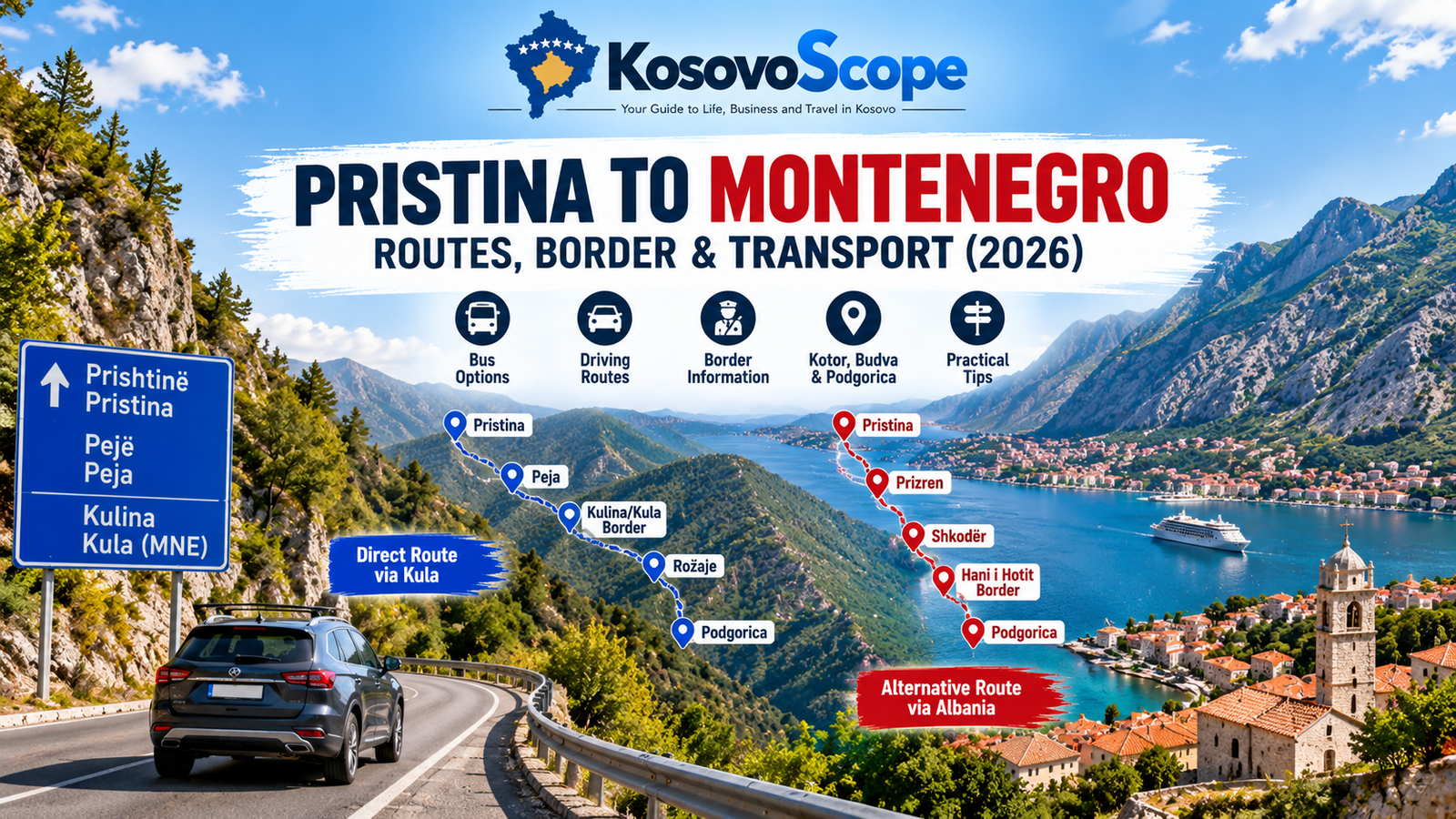
Planning to travel from Pristina to Montenegro? Whether you’re visiting Podgorica, exploring the medieval streets of Kotor or heading for the beaches of Budva, there are several ways to make the journey from Kosovo.
You can take an international bus, drive directly through the mountainous Kulina–Kula border crossing or consider a route through Albania.
However, the best option depends on your destination, nationality, vehicle documents and travel date.
A trip to Podgorica is not the same as a journey to Kotor, Budva or Ulcinj. Choosing the wrong connection could add unnecessary transfers, while taking a rental car across international borders requires advance permission.
This Pristina to Montenegro transport guide for 2026 explains the main driving routes, bus connections, border requirements, motor insurance considerations and practical travel tips.
Pristina to Montenegro: Quick Travel Facts
| Travel question | Answer |
|---|---|
| Departure | Pristina, Kosovo |
| Destination | Montenegro |
| Main direct border | Kulina (Kosovo) – Kula (Montenegro) |
| Main direct driving corridor | Via Peja and Rožaje |
| Alternative driving corridor | Through Albania |
| Pristina–Podgorica bus | Listed by Gjirafa Travel |
| Listed bus route distance | Approximately 251 km |
| Average advertised bus journey | 6 hours 48 minutes |
| Average advertised bus fare | €16.80 |
| Currency in both countries | Euro (EUR) |
| Main coastal destinations | Kotor, Budva, Tivat and Ulcinj |
Bus statistics are based on Gjirafa Travel’s general route listing reviewed on October 21, 2026. They are not guaranteed fares, timetables or departure availability for any particular date.
Route 1: Kosovo to Montenegro via Kula
Direct route: Pristina → Peja → Kula/Kulina border → Rožaje → Podgorica.
The map shows the main stops rather than a drawn road route. Check the mountain crossing and the actual driving directions before travel.
Route 2: Montenegro via Albania
Alternative route: Pristina → Prizren → Vërmicë/Morinë → Shkodër → Hani i Hotit/Božaj → Podgorica.
When opening directions, verify that the Albania–Montenegro crossing is Hani i Hotit–Božaj. Routes may be recalculated by the navigation provider. For Ulcinj, consider the Muriqan–Sukobin crossing instead.
What Is the Best Way to Travel from Pristina to Montenegro?
For most travelers, the choice comes down to three options:
International bus: Practical for visitors traveling to Podgorica without a car. Additional transport may be needed for the coast.
Private or rental car: Useful for travelers planning to explore multiple destinations, although insurance, mountain roads and border authorization require careful preparation.
Private transfer: A potentially convenient option for families, groups and visitors with substantial luggage, subject to a confirmed quotation.
There is no single best route for every traveler.
If you’re traveling alone and mainly visiting Podgorica, compare available direct buses first.
If you want to visit Kotor, Budva, Perast and national parks, having an appropriately insured car can offer much greater flexibility.
1. Pristina to Podgorica by Bus
Traveling by bus is an established way to reach Montenegro’s capital from Kosovo.
Gjirafa Travel lists the Pristina–Podgorica route at approximately 251 km, with an average advertised journey duration of 6 hours 48 minutes and an average ticket price of €16.80.
The listing includes a direct service priced from approximately €15, although departure times, prices and the available operator may change.
Check current buses: Gjirafa Travel – Pristina to Podgorica
Where Does the Bus Depart?
Listed services typically use Pristina’s main bus station.
Check the actual departure location and boarding instructions on your ticket.
Arrive early enough to locate the correct vehicle, especially when traveling with luggage.
How Long Does the Bus Take?
The advertised average is approximately six hours and 48 minutes.
Individual trips may take longer due to border inspections, mountain road conditions, traffic or connections.
Never treat a published average as a guaranteed arrival time.
How Much Does a Ticket Cost?
The general route listing shows an average of €16.80, with advertised fares starting around €15.
Check your chosen date for the actual price, operator, departure time and booking conditions.
Are There Direct Buses?
Direct options appear on the booking platform, alongside connection-based itineraries.
However, availability can vary by date.
Before purchasing, verify whether the service is truly direct and whether your ticket covers the entire journey.
What Happens at the Border on a Bus?
Follow the driver’s instructions and keep your travel documents accessible.
Passengers may be asked to present identification or complete the applicable border checks.
Allow additional time for delays and avoid scheduling tight onward connections.
2. Pristina to Montenegro by Car: Direct Route via Kula
The main direct overland route from Kosovo into Montenegro uses the Kulina–Kula border crossing.
A typical approach is:
Pristina → Peja → Kulina–Kula border → Rožaje → onward destination.
This route crosses mountainous terrain between western Kosovo and eastern Montenegro.
The drive can be scenic, but road conditions vary by season.
Driving Toward Peja
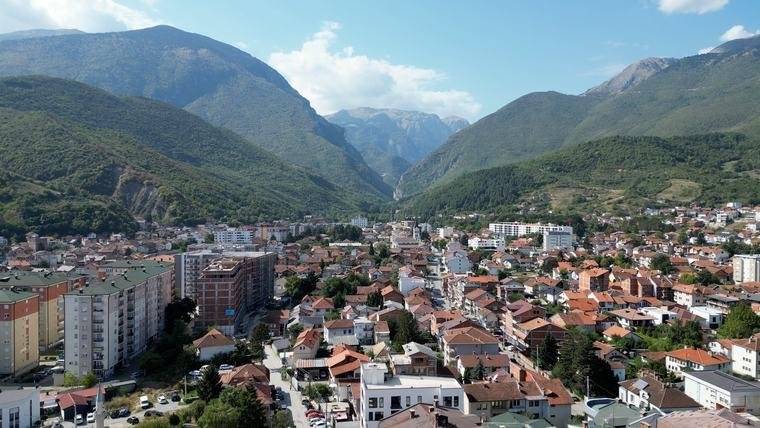
Leave Pristina and travel toward Peja, following current navigation and road signs.
Peja is an important access point for the direct border route.
Before continuing into the mountains, consider checking fuel, weather conditions and estimated travel time.
Crossing at Kulina–Kula
Kulina is on the Kosovo side and Kula is on the Montenegrin side.
Montenegro’s national tourism organization identifies Kula as an official road border crossing with Kosovo.
Carry all necessary identification and vehicle documents.
Do not assume simplified regional travel arrangements remove the need to present documents.
Continuing Toward Rožaje
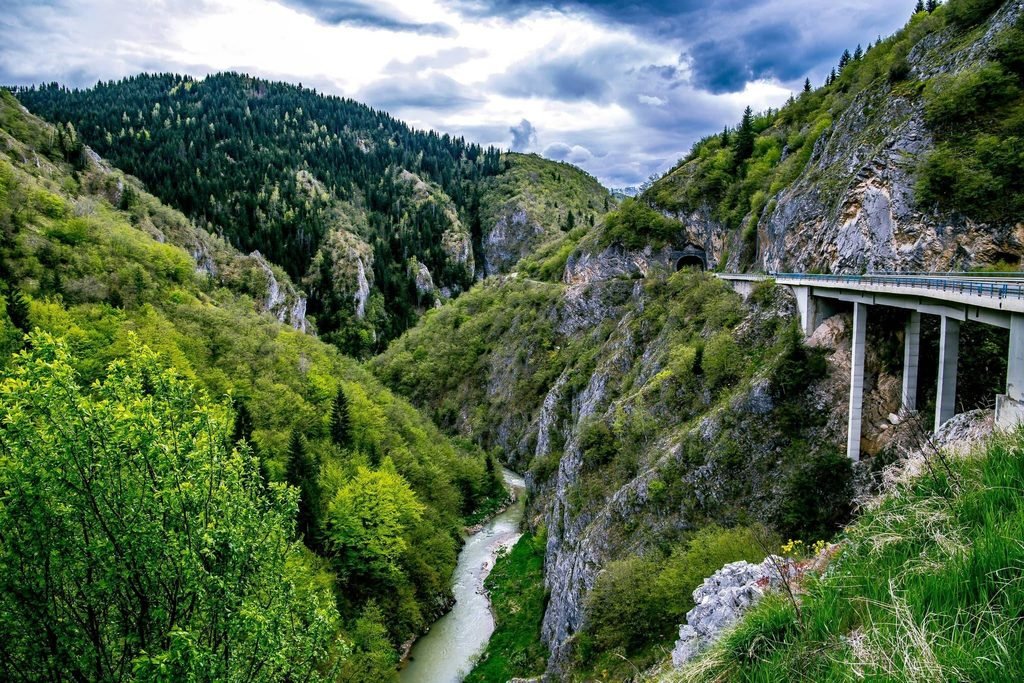
After entering Montenegro, the road leads toward the Rožaje region.
From here, choose the appropriate onward route based on your destination.
Driving toward Podgorica is a different journey from heading to northern mountain areas or the Adriatic coast.
Use current navigation rather than following an old travel-blog map.
Is the Kula Route Difficult?
It is a mountain crossing, so additional care is necessary.
Potential hazards include:
- Snow and ice in colder months.
- Fog and reduced visibility.
- Winding roads and changes in elevation.
- Roadworks or temporary restrictions.
- Heavy rain and reduced traction.
Check the road conditions before departure, especially in autumn and winter.
The Automobile Association of Montenegro publishes traffic information at amscg.org.
3. Alternative Route: Pristina to Montenegro Through Albania
Traveling through Albania is another option, especially when your destination is southern Montenegro.
The route requires entering Albania from Kosovo and then crossing into Montenegro.
Depending on your destination, you may consider:
Via Shkodër and Hani i Hotit–Božaj: A road corridor toward Podgorica.
Via Shkodër and Muriqan–Sukobin: An alternative for Ulcinj and parts of the southern coast.
Both Albania–Montenegro crossings are identified by Montenegro’s official border information.
Is the Albania Route Faster?
Not necessarily.
It can be useful for particular coastal destinations but involves two international borders.
Overall journey time depends on your starting point, traffic, border delays, road conditions and final destination.
Compare available routes immediately before traveling.
What Documents Do You Need?
Because the itinerary enters three jurisdictions, your travel arrangements must satisfy the rules for Kosovo, Albania and Montenegro.
Check:
- Your eligibility to enter Albania.
- Your eligibility to enter Montenegro.
- Your eligibility to return to Kosovo.
- Car insurance recognized in both Albania and Montenegro.
- Rental-car permission covering each country.
A rental vehicle authorized for Albania is not automatically authorized for Montenegro.
4. Pristina to Kotor: Best Transport Options
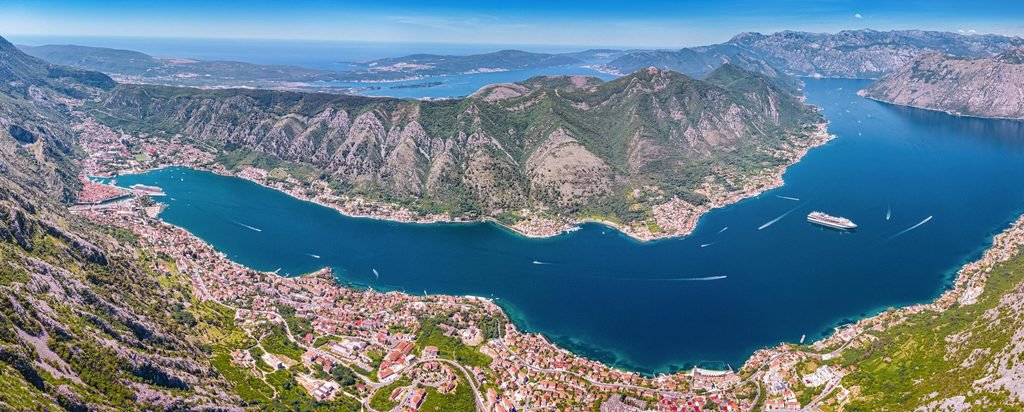
Kotor is one of Montenegro’s most popular coastal destinations.
Its medieval Old Town and the dramatic Bay of Kotor make it particularly attractive for a multi-day holiday.
Traveling by Car
Drivers can compare the direct crossing via Kula with alternative routes through Albania, depending on the season and road conditions.
Both approaches require careful planning.
Coastal traffic can be particularly heavy during the summer.
Traveling by Bus
One option is to travel from Pristina to Podgorica and connect to a domestic bus toward Kotor.
Check the connection times and departure stations before booking.
Do not assume that the arrival time of an international bus guarantees a convenient onward departure.
If your international coach arrives late at night, an overnight stay in Podgorica may be necessary.
How Long Should You Stay?
For most visitors, at least two nights in Kotor provide a more enjoyable trip than attempting to travel from Kosovo and return immediately.
For information about Kotor’s attractions and other destinations, see our Montenegro from Kosovo: Complete Travel Guide (2026).
5. Pristina to Budva
Budva combines Adriatic beaches, a historic Old Town and a busy summer tourism scene.
You can reach it by car using a route appropriate to current road and border conditions.
Without a car, compare international buses toward Podgorica with onward connections to Budva.
Before booking, confirm the full journey, not just the international segment.
Budva is particularly busy during the summer, so allow extra time for coastal congestion and transfers.
6. Pristina to Ulcinj
Ulcinj lies in southern Montenegro and may be a practical destination for visitors who want sandy beaches and a longer seaside stay.
Because of its location, an itinerary through Albania may be worth comparing with the direct Kosovo–Montenegro mountain route.
A possible approach travels from Kosovo into northern Albania before using the Muriqan–Sukobin border crossing.
Check current border operations, driving conditions and insurance before departure.
Ulcinj should not be confused with Podgorica, and the transport connections serving each destination may be very different.
7. Kosovo–Montenegro Border Documents and Visa Requirements
Entry requirements depend on nationality, travel document type and the rules in force on your travel date.
Important 2026 update for Turkish citizens: Montenegro’s Ministry of Foreign Affairs announced that Turkish nationals will require a visa from November 1, 2026, following a government decision adopted in July. The existing visa-free arrangement allowing visits of up to 30 days applies only through October 31, 2026.
Travelers should check the latest official requirements and any qualifying exceptions before booking.
Kosovo Citizens
According to the Government of Montenegro, Kosovo citizens can enter without a visa for up to 90 days using a valid travel document.
Montenegro also permits visa-free stays of up to 30 days using a valid Kosovo national identity card.
These conditions apply to Kosovo citizens, not automatically to all foreign residents of Kosovo.
EU, British and American Travelers
Montenegro publishes visa exemptions for many European and other nationalities.
Permitted stays and accepted identification depend on citizenship and document type.
Always check the current official rules for your passport.
Foreign Residents of Kosovo
Holding a Kosovo residence permit does not automatically establish the right to enter Montenegro.
Verify the specific rules for your nationality.
Also ensure that your Kosovo documents permit re-entry after your trip.
Returning to Kosovo
Before departure, confirm that you can legally re-enter Kosovo.
Travelers with visas, temporary residence arrangements or limited-entry authorizations should pay particular attention to this requirement.
Official information: Government of Montenegro – Visas
8. Car Insurance, Rental Cars and Driving Documents
International vehicle travel requires more preparation than a domestic road trip.
Before leaving Kosovo, confirm that you have the documentation required for your specific vehicle and itinerary.
Important Vehicle Documents
Depending on your circumstances, prepare:
- Valid passport or accepted identity document.
- Driving licence recognized by Montenegro.
- Vehicle registration certificate.
- Proof of ownership or authorization to drive.
- Legally accepted third-party insurance.
- Written rental-car cross-border permission, if applicable.
Is Kosovo Car Insurance Accepted in Montenegro?
Do not assume that insurance purchased in Kosovo automatically provides recognized liability coverage in Montenegro.
The answer depends on the vehicle’s registration, the applicable insurance arrangements and the documents issued by your insurer.
Contact your provider before crossing.
Where necessary, obtain the additional insurance documentation required for your vehicle.
Rental Cars from Kosovo
Some rental companies permit cross-border travel; others restrict it.
Ask your provider to confirm:
- Whether Montenegro is permitted.
- Whether transit through Albania is also allowed.
- Which countries are covered by motor insurance.
- Whether written authorization is provided.
- Whether additional charges apply.
- What happens in the event of a breakdown or accident abroad.
Keep the written permission with your vehicle documents.
9. Bus vs Car vs Private Transfer
| Factor | International bus | Car | Private transfer |
|---|---|---|---|
| Best for | Podgorica and budget travel | Multiple destinations | Door-to-door convenience |
| Scheduling | Fixed departure | Flexible | Prearranged |
| Border documents | Personal documents | Personal and vehicle documents | Personal documents |
| Driving responsibility | Operator | Driver | Operator |
| Coastal travel | May require connection | Flexible | Depends on booking |
| Main limitation | Timetable and transfers | Insurance, parking and driving | Higher total cost |
A bus is often the simplest starting point for someone traveling alone.
A car is better suited to exploring Montenegro’s coastline and national parks, provided all insurance and cross-border requirements are satisfied.
Private transfers may be useful for groups, but the complete price and route must be confirmed in advance.
10. When Is the Best Time to Travel?
Spring
Spring is suitable for city breaks and some coastal sightseeing.
Higher mountain roads can still be affected by snow or poor weather.
Summer
Summer is popular for Kotor, Budva and Ulcinj.
Expect more traffic and busier accommodation markets.
Autumn
Early autumn can be attractive for sightseeing, but road conditions become increasingly important in the mountains later in the season.
Winter
Mountain travel requires particular caution.
Do not use the Kula route without checking current road and weather conditions.
Choose suitable tires and equipment as required by local regulations.
11. Practical Travel Tips
Check the latest bus timetable. Published route averages are not a guarantee that a particular service operates on your travel date.
Verify border and visa rules. This is particularly important for travel beginning in November 2026.
Confirm cross-border insurance. Different rules can apply to Kosovo-registered, foreign-registered and rental vehicles.
Keep documents accessible. Border officers may need to inspect both identification and vehicle paperwork.
Plan onward connections carefully. A bus ticket to Podgorica is not a ticket to Kotor or Budva.
Consider an overnight stay. Late arrivals can make immediate coastal connections inconvenient.
Monitor mountain weather. Conditions at the border can differ greatly from the weather in Pristina.
Allow a generous return margin. Avoid planning a flight immediately after a long international bus or car journey.
Remember tourist registration. Ask your accommodation provider how your stay will be registered in Montenegro.
Frequently Asked Questions
How do I get from Pristina to Montenegro?
You can use an international bus, drive through the Kulina–Kula crossing, travel via Albania or arrange a private transfer.
Is there a direct bus from Pristina to Podgorica?
Direct services have been listed by Gjirafa Travel, but the operator and timetable should be checked for your travel date.
How much is the bus from Pristina to Podgorica?
Gjirafa Travel’s general listing reviewed in October 2026 showed an average fare of €16.80, although individual prices vary.
How long does the bus journey take?
The same listing showed an average duration of 6 hours 48 minutes. Border checks and road conditions may affect actual arrival time.
Which border crossing connects Kosovo and Montenegro?
The main direct road border crossing is Kulina–Kula.
Can you travel to Montenegro through Albania?
Yes. Travelers can consider routes through northern Albania, provided entry and vehicle requirements are satisfied for all countries involved.
Can I travel directly from Pristina to Kotor?
You can drive, subject to border and insurance requirements. By bus, compare available international and onward domestic connections.
Do Turkish citizens need a visa for Montenegro in November 2026?
Yes, according to Montenegro’s July 2026 government announcement, Turkish citizens become subject to a visa requirement from November 1, 2026. Confirm current application rules and exemptions with the relevant Montenegrin authorities before traveling.
Does Montenegro use the euro?
Yes. Both Kosovo and Montenegro use the euro.
Can I drive a Kosovo rental car into Montenegro?
Only if the rental company authorizes international travel and the vehicle has the legally required documentation and insurance.
Final Thoughts: Planning Your Trip from Pristina to Montenegro
Traveling from Pristina to Montenegro is a rewarding way to expand a Kosovo-based Balkan holiday.
For travelers heading to Podgorica, international buses provide an option without the responsibilities of driving.
For Kotor, Budva, Ulcinj or a multi-stop road trip, a car may offer greater flexibility.
The most important decisions are choosing the right route, checking the border conditions and confirming your travel and vehicle documents.
Remember that the Kosovo–Montenegro mountain crossing and the alternative routes through Albania involve different roads and border procedures.
And if you’re traveling in late 2026, pay particular attention to the updated visa rules.
Continue planning with KosovoScope:
- Montenegro from Kosovo: Complete Travel Guide (2026)
- Albania from Kosovo: Complete Travel Guide (2026)
- Pristina to Tirana: Bus, Car & Border Guide (2026)
- North Macedonia from Kosovo: Complete Travel Guide (2026)
Information reviewed on October 21, 2026. Transport schedules, border operations, road conditions and visa requirements may change.
Sources & Official Travel Information
- Government of Montenegro – Visa Policy Changes, July 2026 — Visa changes scheduled for November 1, 2026.
- Government of Montenegro – Türkiye Visa Regime — The visa-free arrangement valid through October 31, 2026.
- Government of Montenegro – Kosovo Visa Regime — Kosovo citizen entry conditions.
- Government of Montenegro – Visas — General nationality-specific entry information.
- Montenegro National Tourism Organisation – Conditions for Entering Montenegro — Official border crossing information.
- Gjirafa Travel – Pristina to Podgorica — Published bus listings, indicative prices and journey times.
- Government of Montenegro – Border Control — General border entry requirements.
- Automobile Association of Montenegro — Road conditions and driving information.
- Kosovo Insurance Bureau — Kosovo motor insurance information.
- Montenegro National Tourism Organisation — Travel planning and regional destinations.
- KosovoScope – Montenegro from Kosovo — Destination ideas and regional travel information.
Photo Credits & Image Sources
KosovoScope acknowledges the photographers whose work illustrates this travel guide. The destination photographs are sourced from Wikimedia Commons and remain subject to their respective Creative Commons licenses.
- Peja – City Panorama, Kosovo
Photographer: Arianit (Arianit Dobroshi)
Original photograph – Wikimedia Commons
License: CC BY-SA 4.0 - Rožaje – Mountain Road, Montenegro
Photographer: Gregor Joham
Original photograph – Wikimedia Commons
License: CC BY-SA 2.0 - Shkodër – Rozafa Castle, Albania
Photographer: Artemiss.B
Original photograph – Wikimedia Commons
License: CC BY-SA 4.0 - Podgorica – City Architecture, Montenegro
Photographer: Avi1111 (Avishai Teicher)
Original photograph – Wikimedia Commons
License: CC BY-SA 4.0 - Kotor – Bay of Kotor, Montenegro
Photographer: Alexander Klink
Original photograph – Wikimedia Commons
License: CC BY 4.0
Featured Image Disclosure
The featured image is an AI-generated editorial illustration created for KosovoScope. Roads, route lines, border markers and destination scenery are illustrative and do not represent exact geographical routes or actual road conditions.
Image Licensing and Modifications
The destination photographs remain subject to their respective Creative Commons licenses.
Any image modifications, including cropping or color adjustments, should be disclosed accurately. Adapted images licensed under CC BY-SA must comply with the applicable ShareAlike requirements.
Photographer attribution does not imply endorsement of KosovoScope.
[…] For detailed information about road connections and border crossings, read our Pristina to Montenegro: Routes, Border & Transport Guide. […]