
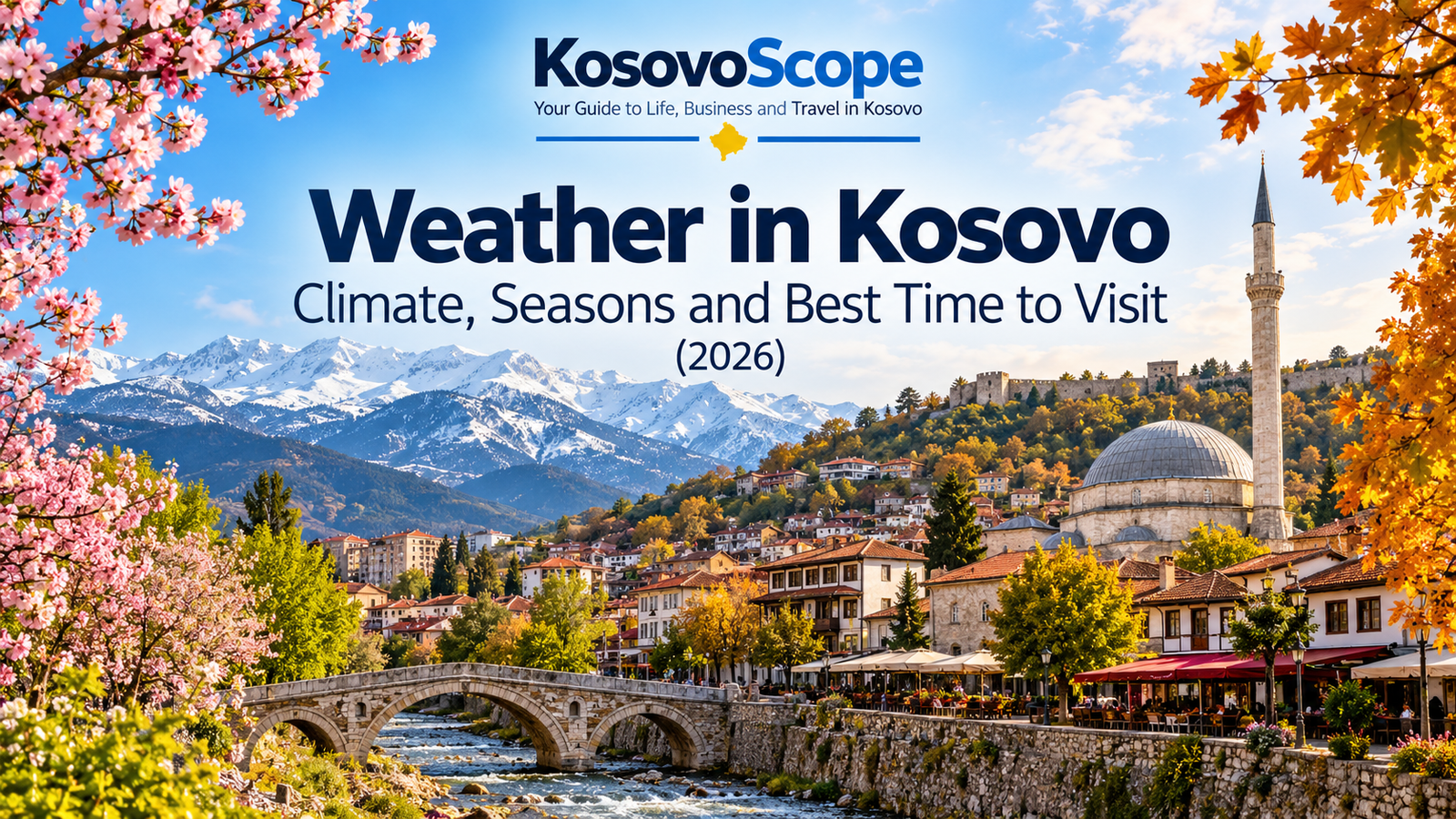
Understanding the weather in Kosovo can make a big difference when planning a trip, moving to the country or deciding which season suits you best.
Kosovo has a largely continental climate, with hot summers, cold winters and noticeable differences between lowland cities and mountain areas.
Pristina, Prizren, Peja and the country’s mountain regions can all feel quite different depending on the season, altitude and local conditions.
This guide explains the climate in Kosovo, what to expect in each season, when snow is most likely, the best months for sightseeing and hiking, and what to pack for your trip.
Weather in Kosovo: Climate Overview
Kosovo generally experiences four distinct seasons.
Summers can be hot and dry, especially in lower-elevation urban areas, while winters can bring freezing temperatures and snowfall.
Spring and autumn are usually milder and are often the most comfortable periods for sightseeing.
Official hydrometeorological data from Pristina shows how wide the seasonal range can be. In 2024, the average monthly temperature in Pristina was around 2°C in January and approximately 24.5°C in July, while the recorded annual extremes ranged from −13.9°C to 38.9°C. These figures describe that specific year rather than a permanent climate average. ammk-rks.net
Kosovo’s Statistics Agency also reported that in 2025, measured temperatures ranged from a monthly minimum extreme of −12.7°C in February to a maximum of 40.2°C in July. Again, these figures illustrate recent conditions rather than long-term normals. ASK
Spring in Kosovo: March to May
Spring is one of the best seasons to visit Kosovo.
Temperatures gradually become milder, daylight increases and landscapes turn greener.
March can still feel cool, particularly in the mornings and evenings, while April and May are generally more comfortable for walking and sightseeing.
Spring is especially suitable for:
- city breaks in Pristina and Prizren;
- cultural sightseeing;
- road trips;
- lower-altitude hiking;
- photography.
Rain is possible throughout the season, so a light waterproof jacket is useful.
In the mountains, snow may remain at higher elevations even when cities are already experiencing mild spring weather.
Summer in Kosovo: June to August
Summer is the warmest and busiest travel season.
June, July and August can bring high daytime temperatures, particularly in Pristina and other lower-elevation areas.
Recent official observations show that summer heat can become intense. Pristina recorded a maximum temperature of 38.9°C in August 2024, while Kosovo’s 2025 environmental statistics recorded a July maximum of 40.2°C. ammk-rks.net
Visitors travelling during heatwaves should avoid treating these extremes as everyday temperatures, but they show that very hot conditions are possible.
Summer works particularly well for:
- festivals;
- evening city life;
- mountain trips;
- hiking at higher elevations;
- outdoor cafés;
- road trips around Kosovo.
If you are sightseeing in the middle of summer, schedule longer walks for the morning or late afternoon.
Autumn in Kosovo: September to November
Autumn can be one of the most pleasant times to travel around Kosovo.
September often retains some summer warmth, while October brings cooler temperatures and autumn colours.
By November, temperatures can fall significantly and winter conditions begin to approach.
Autumn is a good season for:
- Prizren and Pristina city trips;
- photography;
- countryside drives;
- hiking before winter conditions arrive;
- travellers who prefer fewer crowds.
The main drawback is that weather becomes increasingly unpredictable later in the season.
Pack layers rather than relying on one heavy item of clothing.
Winter in Kosovo: December to February
Winters in Kosovo can be cold, with freezing nights, frost and snowfall.
Pristina and other urban areas can experience sub-zero temperatures, while mountain areas are significantly colder and receive more persistent snow.
In the 2024 hydrometeorological data for Pristina, January recorded an extreme minimum of −13.9°C. ammk-rks.net
Snowfall varies from year to year, but winter snow is common enough that visitors should prepare for icy roads, reduced visibility and changing driving conditions.
Winter is particularly suitable for:
- skiing and snow activities;
- mountain scenery;
- quieter city travel;
- winter photography.
Travellers renting cars should pay attention to winter equipment requirements and weather forecasts before mountain journeys.
Weather in Pristina
Pristina has a continental climate with hot summers and cold winters.
Because it sits at a moderate elevation, temperatures can change substantially between seasons.
Recent official data shows that Pristina’s 2024 monthly average temperatures ranged from around 2°C in January to roughly 24.5°C in July. ammk-rks.net
In practical terms:
Winter: cold, sometimes snowy and often below freezing at night.
Spring: variable but increasingly mild.
Summer: hot, sunny and occasionally very hot.
Autumn: mild early on, becoming colder by November.
If you are visiting Pristina primarily for sightseeing, late spring and early autumn are often the most comfortable periods.
Weather in Prizren
Prizren generally feels slightly different from Pristina because of its location and surrounding terrain.
Summers can become very warm, particularly in the historic centre where paved streets and buildings retain heat.
Spring and early autumn are excellent for walking through Shadervan, visiting the Stone Bridge and climbing toward Prizren Fortress.
During summer, the fortress climb is best attempted in the morning or near sunset rather than during the hottest part of the day.
Winter can be cold, although conditions in the city are generally less severe than in nearby mountain areas.
For detailed sightseeing advice, visitors can also read our Prizren Travel Guide.
Weather in Peja and Rugova
Peja sits close to the mountains and is a gateway to the Rugova region.
Weather conditions become increasingly mountain-like as you move toward Rugova Gorge and higher elevations.
Summer temperatures in mountain areas are often more comfortable than in Kosovo’s cities, making the region popular for hiking and outdoor activities.
However, mountain weather can change quickly.
Even during warmer months, hikers should carry an extra layer and protection against rain.
In winter, snow can be considerably deeper and longer lasting than in urban lowlands.
Weather in Brezovica and the Sharr Mountains
Brezovica and the Sharr Mountains are among Kosovo’s best-known winter destinations.
Higher elevation means colder temperatures, more snow and a longer winter season than in cities such as Pristina or Prizren.
Winter travellers should check road and snow conditions before departure.
In summer, the area becomes attractive for hiking, scenery and escaping city heat.
This difference in elevation is one reason it is difficult to describe the weather in Kosovo with a single national temperature.
Rainfall in Kosovo
Rainfall occurs throughout the year but varies by month, region and year.
Kosovo’s Statistics Agency reported 595.2 mm of average annual precipitation in 2025, down from the previous year. The agency also recorded 126 precipitation days in Pristina during 2025. ASK
These values should be understood as 2025 observations rather than permanent long-term climate averages.
For travellers, the practical lesson is simple: rain is possible in every season.
A lightweight waterproof jacket is useful even during spring and early autumn trips.
Does It Snow in Kosovo?
Yes.
Snow is common during winter, particularly in mountainous regions.
Cities such as Pristina can also receive snow, although the depth and duration vary considerably between winters.
Mountain destinations such as Brezovica and the Sharr Mountains are much more likely to maintain snow cover for extended periods.
If you are travelling to Kosovo specifically for snow, January and February generally offer better chances than early December, but weather conditions should always be checked close to your trip.
Best Time to Visit Kosovo
There is no single best month for every visitor.
The ideal period depends on what you plan to do.
Best Time for City Sightseeing
April to June and September to October are usually the most comfortable periods.
Temperatures are generally better suited to walking than during peak summer heat.
These months work especially well for visiting Pristina and Prizren.
Best Time for Hiking
Late spring through early autumn is generally the main hiking period.
Higher trails may remain snowy later into spring, while autumn weather can deteriorate quickly at elevation.
For serious mountain routes, always check local conditions before setting out.
Best Time for Summer Festivals
July and August offer the liveliest summer atmosphere.
Prizren’s DokuFest and other cultural events can make summer especially attractive, although accommodation may become busier during major festivals.
Best Time for Winter Sports
January and February are usually the most reliable months for winter conditions at higher elevations.
Snowfall varies from year to year, so check current resort and road conditions before planning your trip around skiing.
Month-by-Month Weather Guide
January
One of the coldest months.
Expect freezing temperatures, frost and possible snow.
Best for winter scenery and mountain trips.
February
Still firmly winter.
Snow remains possible in cities and is more likely in mountain areas.
March
Weather becomes more changeable.
Cold spells can still occur, but warmer days become increasingly common.
April
A good month for sightseeing.
Temperatures become milder, although rain and sudden temperature changes remain possible.
May
One of the most comfortable months for travel.
Landscapes are green and temperatures generally suit outdoor activities.
June
Early summer begins.
Days become warmer and longer, making June excellent for city trips and hiking.
July
Typically one of the hottest months.
Plan outdoor sightseeing around the hottest part of the afternoon.
August
Usually hot and dry-feeling in many urban areas.
Excellent for festivals and mountain escapes.
September
One of the strongest all-round travel months.
Warm days often continue while extreme summer heat becomes less likely.
October
Cooler weather and autumn colours arrive.
A good month for city visits and scenic drives.
November
Noticeably colder.
Rain, fog and early winter conditions become more common.
December
Winter conditions return.
Snow is possible and mountain areas become increasingly suited to winter activities.
What to Pack for Kosovo
Packing should depend heavily on the season.
Spring
Bring:
- light jacket;
- waterproof layer;
- comfortable walking shoes;
- sweaters or layers.
Summer
Bring:
- lightweight clothing;
- sunscreen;
- hat;
- reusable water bottle;
- comfortable walking shoes.
Mountain trips still require an extra layer.
Autumn
Bring:
- layers;
- waterproof jacket;
- warmer clothing for evenings;
- suitable walking shoes.
Winter
Bring:
- insulated coat;
- gloves;
- hat;
- waterproof shoes;
- warm layers.
If visiting mountain areas, winter footwear becomes especially important.
Driving in Different Seasons
Seasonal weather affects road conditions.
Summer driving is generally straightforward, although high temperatures and increased holiday traffic can create delays.
Autumn rain and fog may reduce visibility.
Winter can bring snow and ice, particularly on routes toward mountain destinations.
Before travelling into high-altitude areas, check current road and weather conditions.
Visitors planning to drive extensively can also read our Driving in Kosovo guide.
Air Quality During Winter
Cold weather can sometimes coincide with poorer urban air quality, particularly during heating season.
Kosovo’s Statistics Agency reported that air pollution levels in 2025 remained similar to previous years, reflecting continuing sectoral pollution sources. ASK
Visitors who are particularly sensitive to air pollution may want to monitor current air-quality reports during winter stays in urban areas.
Is Kosovo Too Hot in Summer?
Not usually for the entire season, but periods of very hot weather can occur.
Recent measurements have exceeded 38°C in Pristina and reached above 40°C nationally in 2025 observations. ammk-rks.net
Accommodation with air conditioning can therefore be valuable in July and August.
Is Kosovo Very Cold in Winter?
It can be.
Below-freezing nights are common and temperatures can fall well below zero during cold spells.
Mountain areas are significantly colder than cities.
Visitors from warmer climates should bring proper winter clothing rather than relying on light jackets.
Frequently Asked Questions
What is the climate like in Kosovo?
Kosovo has a largely continental climate with hot summers, cold winters and distinct spring and autumn seasons.
What is the hottest month in Kosovo?
July and August are typically the hottest period, although the exact hottest month varies by year.
What is the coldest month in Kosovo?
January is generally among the coldest months, with freezing temperatures common.
Does it snow in Pristina?
Yes. Pristina can receive snow during winter, although the amount varies significantly between years.
When is the best time to visit Kosovo?
For sightseeing, late spring and early autumn are particularly comfortable.
For hiking, summer and early autumn are usually better.
For winter sports, January and February are generally more suitable.
Is Kosovo good to visit in summer?
Yes.
Summer offers festivals, nightlife and mountain activities, but visitors should prepare for occasional periods of intense heat.
Is Kosovo worth visiting in winter?
Yes, particularly for travellers interested in snow, mountain scenery and quieter cities.
However, winter driving and mountain travel require additional preparation.
Conclusion
The weather in Kosovo changes dramatically through the year, giving each season a different character.
Spring and autumn are excellent for sightseeing, summer brings festivals and mountain adventures, while winter transforms higher regions into snow-covered destinations.
Visitors should also remember that Kosovo’s elevation varies substantially, so weather in Pristina or Prizren may differ significantly from Rugova or the Sharr Mountains on the same day.
For most first-time visitors focused on cities and sightseeing, May, June, September and early October provide a particularly good balance of comfortable temperatures and outdoor conditions.
Whatever season you choose, checking the latest local forecast shortly before travelling is the best way to prepare.
okay wow, I actually needed this today. felt like a little reset.
Kiitos ajatuksistasi.
thank you for saying the difficult part out loud too